St Nicholas parish
The parish
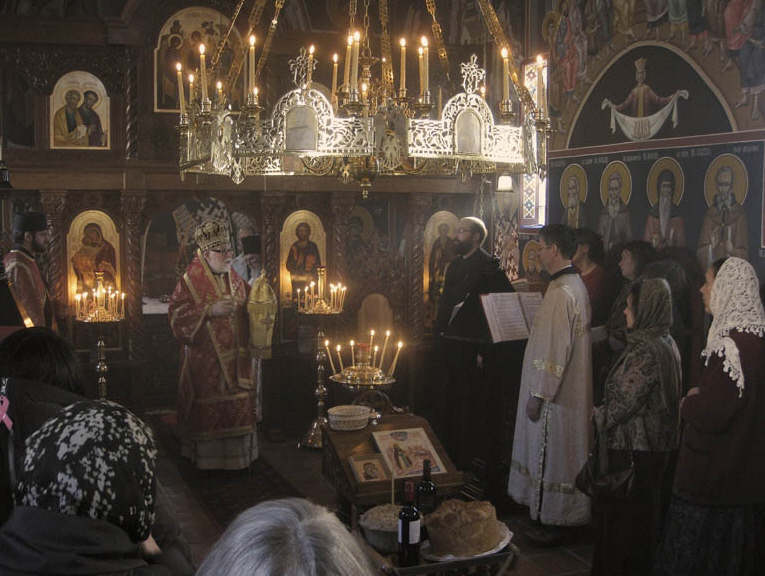
About the Orthodox Church in Norway - St Nicholas Parish
St Nicholas Parish is a multinational Orthodox parish with its center in Oslo and branches in several places in the country. The church's rector is Father Johannes (Johansen), and our bishop is Metropolitan Dositeij of Scandinavia, and therefore our patriarch is the Reverend Porfyrij of Serbia.
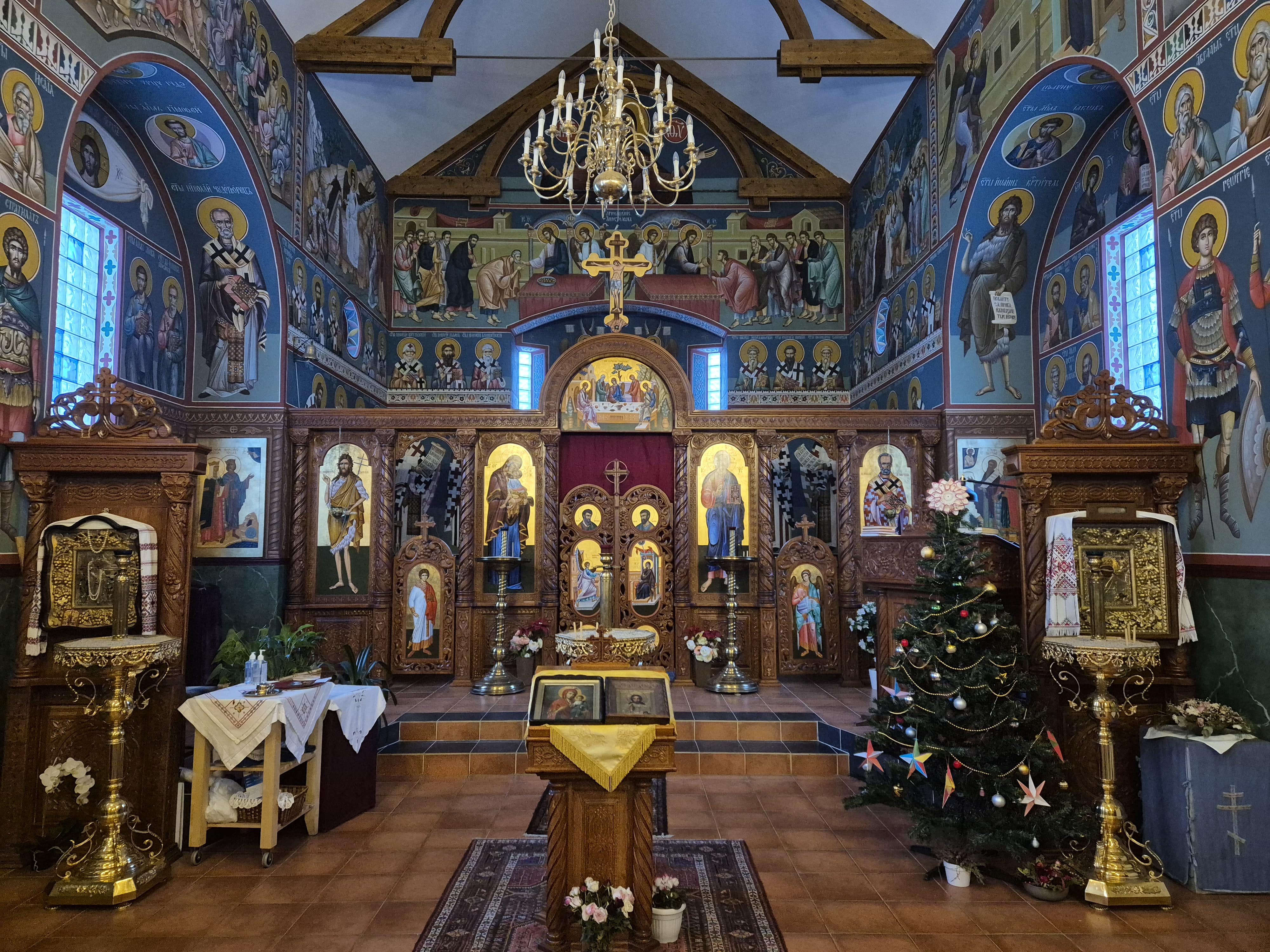
Services are held every Sunday at 11:00 at Tvetenveien 13 in Oslo, with an extended program around the great feast days.
Oslo
Bergen
Sandnes
Neiden
Trifon Skete
Picture: The church on Tvetenveien decorated for Christmas 2024.
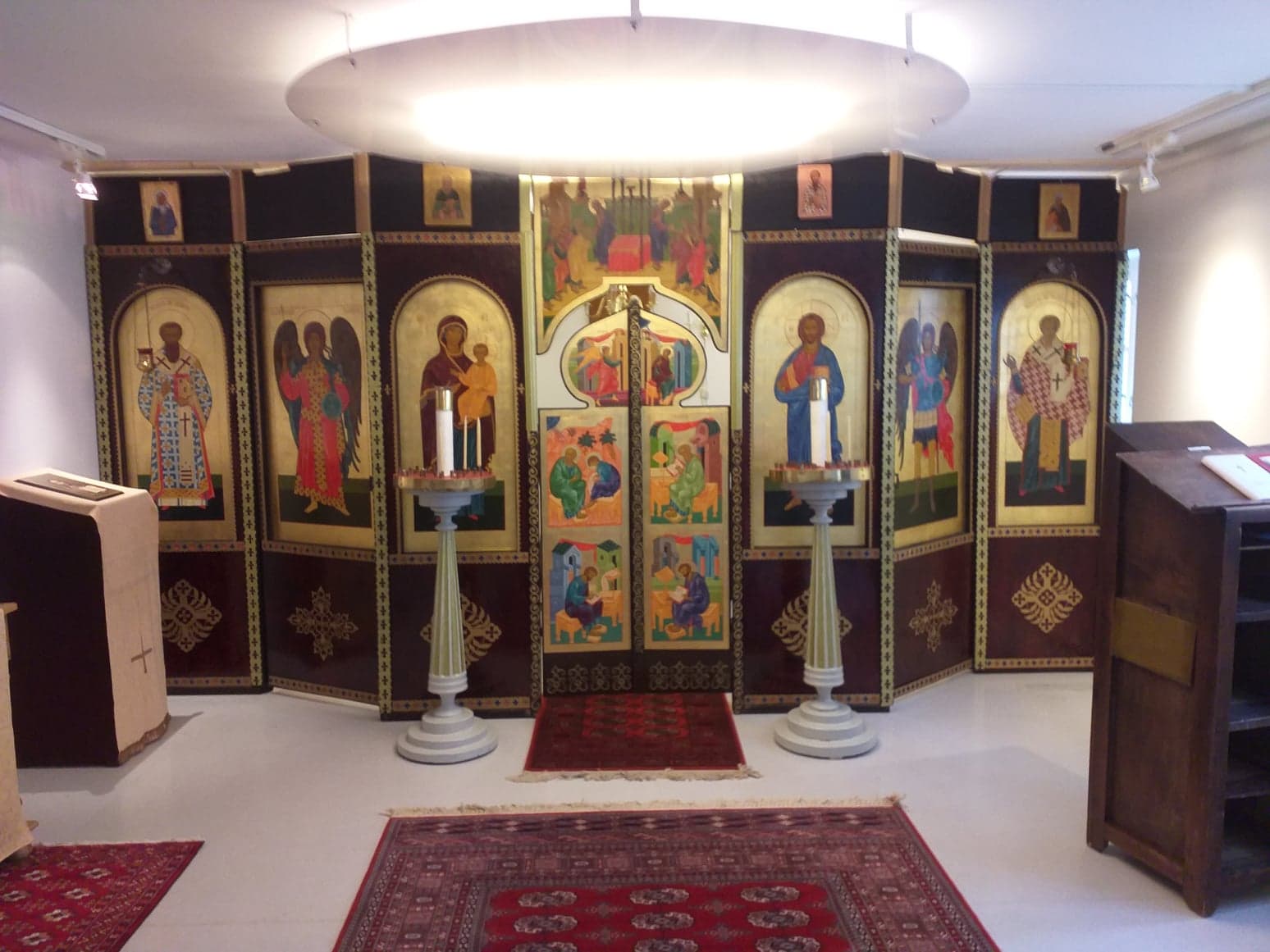
In Bergen, Orthodox believers meet for prayer and fellowship in homes, and on occasion in a chapel.
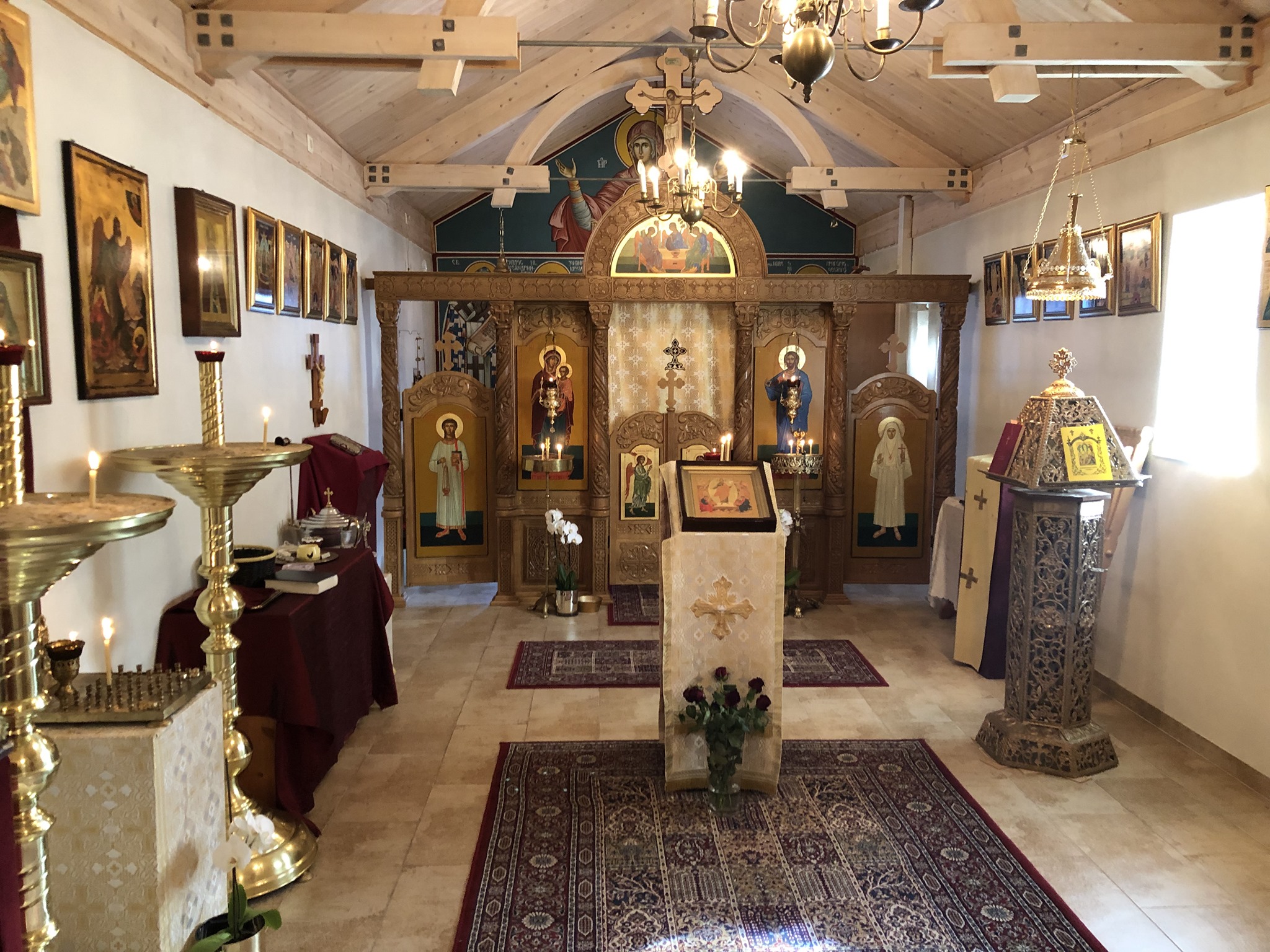
The chapel in Sandnes was blessed in 2005 and serves as a local gathering point for the region.
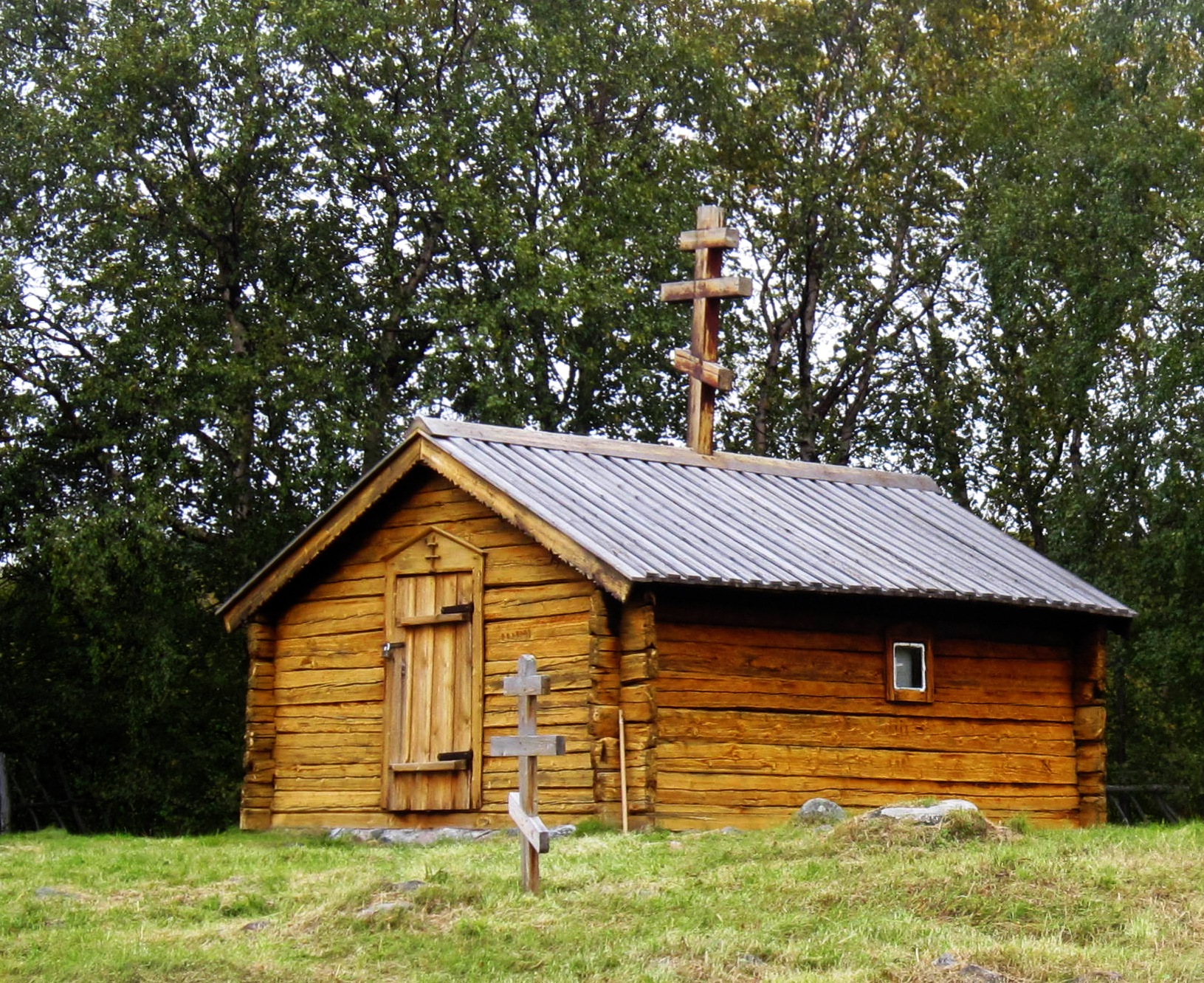
In Neiden there is a unique connection to the Orthodox Sami, with long traditions from the east.
Trifon Skete is a monastery in Hurdal
In Bergen a service is held on the second Saturday of the month at 10:00 at Repslagergaten 7. In Sandnes a service is held on the first Saturday of the month at 10:00 at Daleveien 3. It is Father Johannes who celebrates the service everywhere, but with considerable help from deacons, assistant priests, and church servers in Oslo.
Among them is Archdeacon Father Serafim, who is a monk together with Father Johannes at the monastery in Hurdal.
All services celebrated in St Nicholas parish are conducted in Norwegian and Church Slavonic, with some elements of Greek. This is because of the parish's origin and the composition of its membership, but all Orthodox churches have the same tradition and, as a rule, celebrate the Liturgy of Saint John Chrysostom (directly translated: Golden-mouthed) and, a few times a year, especially during the fast, the Liturgy of Basil the Great. Thus one can, if one wishes, cut and paste different languages into the liturgy, but the structure will remain and be recognizable to the great majority.
If you are new to the Orthodox world, it may help you follow along if you are made aware that large parts of the liturgy proceed as an "ektenia." That means that the priest or the deacon recites prayers which the choir then answers with Herre, Forbarme Deg (Norwegian) or Gospodi Pomiloj (Church Slavonic) or Kyrie Eleison (Greek). On the whole, the longer one takes part in the liturgy, the more it will appear as one single great dance, in which one does not need to remember the next part, because one's soul or subconscious expects the next part as if it were a gear shift in an accelerating car.
St Nicholas Parish arose as an immigrant church of Russians who emigrated in 1920 after the communists' revolution in Russia. The church was then based for many years in Oslo and built its own church premises in 1939 in the crypt under Majorstuen Church, where we remained right up until 2013, when we had a new church built on Tvetenveien. In connection with the many revival movements and the subsequent splits in Protestant circles and the extensive modernization of the Church of Norway, Rolf Johansen, as a 17-year-old, sought out this Russian church in Oslo, which he became part of shortly afterward, and later became a monk at New Valamo Monastery in Finland before he returned to Norway and established a monastery (first at Toten and then in Hurdal) and became a priest in the parish in 1980. This whole story can be seen in this NRK documentary "
Back to the Original
" which was filmed already in 1992.
After he became Father Johannes in 1978, there has been tremendous growth in St Nicholas parish, but also in the Orthodox Church in Norway and in the world in general. In 1985 there were a good 150 members in St Nicholas, and today there are nearly 2000. An increasing share of these members are now also Norwegians who seek the ancient stability that the Orthodox Church can offer. So that, at the count for Easter 2024, there were 20 young catechumens on their way into the church. As so many have pointed out, there is something in the air that has been swirling in the world since 2019 and the corona period. The world will never be the same, and part of what has changed is the Orthodox Church's presence in the West. Which has gone from insignificant to absolutely noteworthy. In Norway alone it is estimated that there are 60 000 Orthodox Christians, besides about 90 000 temporary Ukrainian refugees, which would make it Norway's third largest religious community after the Roman Catholic Church and the Church of Norway.
Amid all these numbers it is important to remember that such ways of measuring are not what we in the Church boast of. Strictly speaking we are not to boast, except of our weakness, and if we begin to boast of our strength and power in numbers, one can be sure that the Lord will come and humble us just as quickly. What the Church can boast of, therefore, is the degree to which it saves souls, for this salvation is not attained without humility.
"The Church is a hospital for souls, not a hotel for saints."